Category Archives: Design, designers and online finds

Jumbo Jet Hotel


Talking about recycling! Swedish Airport Arlanda now offers guests the possibility to sleep in an old airplane.

The airplane, a decommissioned model 747-200 jumbo jet built in 1976, was last operated by Transjet, a Swedish airline that went bankrupt in 2002. It was originally built for Singapore Airlines and later served with legendary Pan Am. This according to the website of the Jumbo Hostel

Cockpit suite

Cockpit suite

The current owner got a permit to turn the jet into a Hostel at the entrance of Arlanda airport. There are 85 beds in total in a total of 25 rooms. Most of the rooms contain 3 bunk beds each except for the cockpit which was transformed into a luxury suite. One of the wings boasts an observation deck and there is a cafe and bar where once sat many coach flying passengers. The rates start at around $40 for the bunks to $350 a night for the suite. Both include breakfast.

Jumbo Hostel Cafe

Jumbo Hostel Cafe

MUJI; minimalistic chic from Japan


muji

When I was living in London, I would frequent the MUJI store on Oxford street quite a lot. It was a few steps away from most of the editing suites I booked for my job at MTV and I would love to explore the shelves in this Japanese retailer. MUJI sells stuff you never knew you just had to have. I would walk out with notebooks, pencils, pill cases, cups and at one point a pair of flip flops. Granted; I still wear those today, 8 years later.

Originally MUJI was Mujirushi (no brand in Japanese), a product brand for a Japanese supermarket. They started with about 40 goods, now stocking over 7000 wannahave products. They recently opened doors in New York City and are branching out rapidly.  

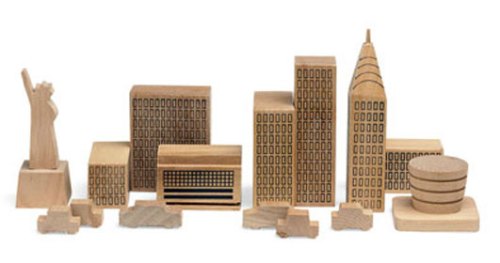
New York in a Bag

New York in a Bag

Their items rage from stationery, furniture, linens and household accessories to food items, gadgets and major kitchen appliances.

MUJI position themselves as an affordable high quality brand, keeping the retail prices of products lower than usual other brands by the materials it selects, streamlining its manufacturing processes, and minimising packaging. All adding to their minimalist and stylish appeal.

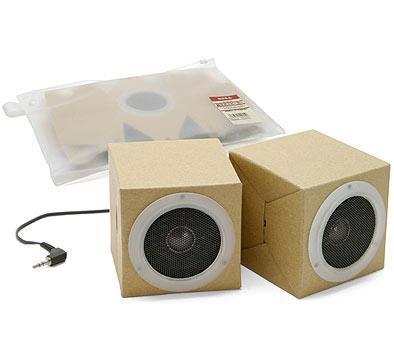
Paper/Card board fold out MP3 player speakers

Paper/Card board fold out MP3 player speakers

 The shop on Oxford street was, and I imagine still is, a white and subtle earth tones sanctuary. It stood for the uncluttered life I certainly was not living! Woods, paper, linens, silk, cotton….imagine Ikea without screaming kids and knots and bolds and without the colours and the arrows on the floor. Actually, no, imagine fancy hotels and houses you see in glossy magazines and everything within financial reach!

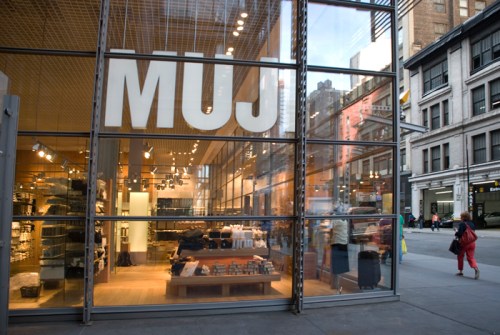
MUJI store on Times Square in NYC

MUJI store on Times Square in NYC

MUJI now ships to pretty much all over the world from their website!

Electrical cord clutter; a few simple solutions


It seems as if all electrical appliances come with multiple cords nowadays. One can’t buy a simple radio or it needs to be connected to more than just the wall outlet. Not to mention the speakers, antenna, cords to and from your i-Pod, PC, modem etcetera.

Result; clutter and then some. Reason enough for some clever designers to come up with clever ideas to reduce the clutter these cords provide for.

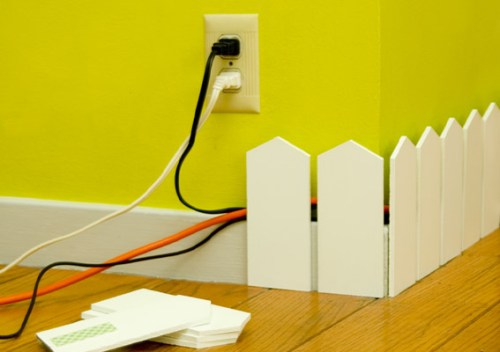
Karl Zahn came up with a crafty and very nostalgic looking solution to attach to the baseboards on your wall.

Karl Zahn's picket fence

Karl Zahn's picket fence

Read more about this here.

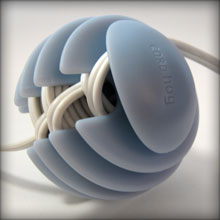
The CORDhog is another simple yet effective solutions. Available in many different colours and very friendly priced too at 6 for $6,-.

CORDhog

CORDhog

Cableorganizer.com offers various solutions, as does Familyhack.com. A great DYI solutions can be found at Decluttered.com
DYI solution at decluttered.com with pegboard or a barbecue grill and hooks and guage wire or clamps

DYI solution at decluttered.com with pegboard or a barbecue grill and hooks and guage wire or clamps

Geeksugar.com has a list of great tips. I particularly like on of them; bundle the cords in an old tube sock!

Tube sock cord manager

Tube sock cord manager

 Please share your ideas!

Porcelain


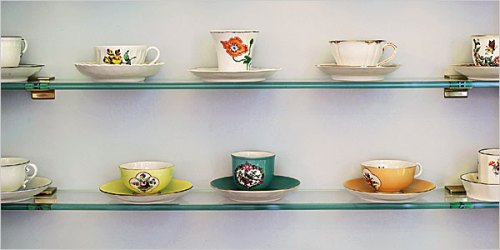
Porsellan Manufaktur Nymphenburg

Porsellan Manufaktur Nymphenburg

Porcelain originated in China, hence the common name for porcelain; China. As early as 100-200 CE, in the Han Dynasty, glazed ceramics were manufactured. During the Tang Dynasty, 618-906 , porcelain was exported to the Islamic world where it was of immense value. It took another couple of centuries before both the technique and products grew popularity in other areas. By the early seventeenth century, it was exported to Europe.


The Chinese managed to keep the production technique a secret for nearly a thousand years, adding to the value of porcelain. Geologist Ehrenfried von Tschirnhaus, who studied at the university of Leiden in the Netherlands, and alchemist Johann Friedrich Böttger managed to crack the code in 1708. The very first European porcelain factory was a fact in April of that same year. It opened its doors in Dresden, later opening shop in Meissen. Staatliche Porzellan-Manufaktur Meissen GmbH still exists today.

Originally used for table ware and decorative pieces; China soon became popular for other products such as toilet bowls, sinks and bath tubs, and later on even as base material for dental crowns. The material is sturdy, solid, water resistant if manufactured in the right way. The thinner material used for table ware tends to be more sensitive and prone to chipping and breaking. However, porcelain never gave in on popularity. To this day porcelain inspires designers and artists around the world. Astier de Villatte for one, as featured elsewhere on this site.

Further to Astier de Villatte; a few other examples of clever or stunning use of porcelain.
 
Berlin based designer Tina Roeder celebrates the generosity of giving flowers with this porcelain bucket. The bucket is inspired on the white plastic ones often seen in flower shops.
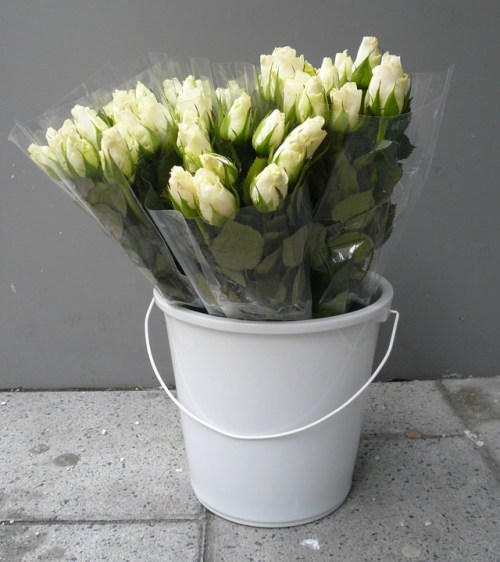
Tina Roeder bucket vase

Tina Roeder bucket vase

The German design company Schönbuch created a series of wall hooks made off porcelain plates and saucers. They range from 8 to 17 cm and cost around € 38,-
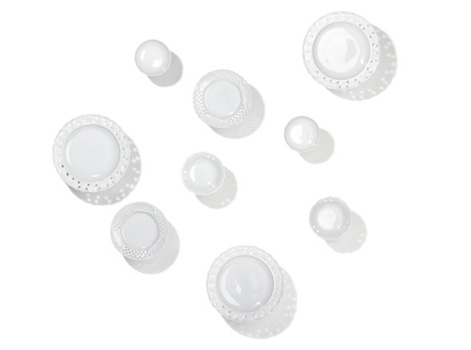
Schönbuch 'China' wall hooks

Schönbuch 'China' wall hooks

Canadian design duo Coe & Waito  created a series of porcelain bottles inspired by the old bottles kids dig up when playing outside. The little bottles with creamy clear glazing are decorated with embellished platinum insects, weeds and dirt as if they were only just dug up. Each bottle is about 10 cm high and costs $68 Canadian dollars.
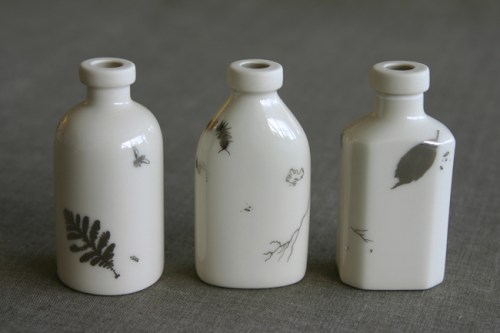
Coe & Waito bottles

Coe & Waito bottles

Australian ceramist Shannon Garson’s fragile yet elegant porcelain bowls were inspired by birds nests and other natural patterns.

Shannon Garson bowls

Shannon Garson bowls

UK designer Sarah Grove makes porcelain vases and jugs, but their surfaces look like they are upholstered with lace and feature textured textiles to suggest comfort and luxury.
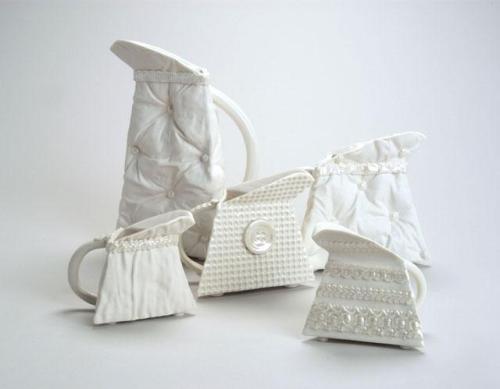
Sarah Grove textile porcelain

Sarah Grove textile porcelain


A wonderful article in the New York Times’ travel pages online suggests a trip to Munich to visit the people that are responsible for this colourful set of porcelain cups (also seen in header of this article). They Are Porzellan Manufaktur Nymphenburg located on the grounds of the baroque wet dream of Ludwig II; Herrenchiemsee Palace.