Bathroom retile. Black and whites


A last post before I leave for a well deserved trip to Tuscany!

Our bathroom is showing some serious wear and tear. It’s a shame really because it’s not that old. It was installed and tiled in 2007, and looked good for about ten minutes before the tiles started fading. They are big grey slate tiles, and to be honest; I am a bit fed up with those anyway. They were a bit too much of a trend so you now see them in all renovations done between 2006 and 2010. Time for a re-tile it is.

Current bathroom. The floor is not visible, but believe me when I say it looks nothing like the slate on the walls anymore

Current bathroom tiles. They look great on the wall, it’s the floor where the problems start


You can see the faded tiles in the shower. They tick me off each day and it's just not worth it.

You can see the faded tiles in the shower. They tick me off each day and it’s just not worth it.

We are leaving the grey slate on the walls, and I am thinking of treating them with an oil finish to make them stand out. For the floor I am either thinking black and white, or just white. Either way, a smaller tile as I think the contrast with the bigger grey slate will look great. Have a look at some of the pictures I collected on my pinterest moodboard. I looked for pictures with a distinct darker colour on the walls to highlight the contrast between the floor and walls.

Love this. It obviously means I’ll have to infuse my bathroom with a few more brocante or antique-ish items, but I guess I could give our bathroom a similar feel. Painting the bathroom rack black or dark grey/blue is a start. Maybe add a small chair?

A clean look, with small white tiles. They are not expensive either. I’d make the seams between the tiles a bit thicker to really show the contrast. And I’d make them dark. This because it would look better, but also because white seams are a nightmare to keep clean


Love this too. Small round tiles, the so-called ‘penny rounds’, found in many American bathrooms from 1940’s and 1950’s. I love how they instantly give character to a bathroom


I also thought of maybe going for a more elaborate floor with a massive contrast effect. But as we are thinking of maybe putting up the house for sale next year, this might not be too great an idea…..

Just look at the floor in this one as the rest is a bit tacky. I do have a thing for marble though….. I bet this would look great with the rugged, dark slate…. But I am dreading even thinking of the final invoice….


What do you reckon I should do?


How LED suffers from a bad rep without deserving it


It was as if we were forced to say goodbye to our good old lightbulbs. From one day to the next, or at least it felt like it,  the cosy glow, lamps that actually lit up right away, were harder and harder to find on the shelves. We were all a bit confused why they were bad for us all of a sudden. And even more frustrating, in return we were given weird shaped fluorescent lamps exuding harsh and unfriendly light. And it took forever to actually exude anything. Sometimes it took minutes to light up completely. The dissatisfaction we felt might be part of the reason why we are not all loving LED bulbs. Because LED bulbs  offer all the good things we liked in our good old bulbs, yet without compromising on our demand for green and eco-friendly. The light is warm, cosy or bright if you need it, and the bulb lights up immediately after its switched on. And what’s best; LED light comes from computer chips. Companies like Philips have already developed special products  and apps that allow you to control the colour or brightness of lighting from you smart phone or tablet. Imagine the possibilities!

Example of an interior design making use of LED lighting

Designers were the most adamant opponent of LED. Yet they are now also the group embracing LED because of its sheer endless stream of opportunities. More and more architects, designers and artists  choose to use LED in their work. The CN tower in Toronto for instance was relit in 2007 making use of LED. Before that the tower was sparsely lit to save energy. LED allows to illuminate the tower fully, with even less energy. And this is just one of many examples of the last few years.

The CN tower is lit with LED since 2007

After a long refurbishment, the Dutch Rijksmuseum in Amsterdam decided to commission Philips to light up the building with LED

Slowly but gradually consumers are embracing LED too. People from the industry expect LED to be responsible for 16% of sales in the residential sector by 2015. Since it’s introduction, LED has grown in popularity and has shown to be in increasing demand by consumers. Interior designers, lamp manufacturers and home/deco stores believe in LED too, and are eager to tell their customers why. A representative of New York based Oriental Lamp Shade Company  commented on how consumers can benefit from LED. “LED lasts a lot longer than regular incandescent lighting. Not only does this mean customers save money, but it also makes LED more eco-friendly. We find that to be an important consideration for customers when they buy lamps and lighting. The rather steep investment pays itself back in more ways than just the longevity. LED uses far less electricity too. Something consumers are beginning to realise more and more. We think eventually LED will be the main source of light we all use”.

A stunning wine cellar with LED lighting as part of the main design


What $2.950.000 buys you in New York.. and in Amsterdam


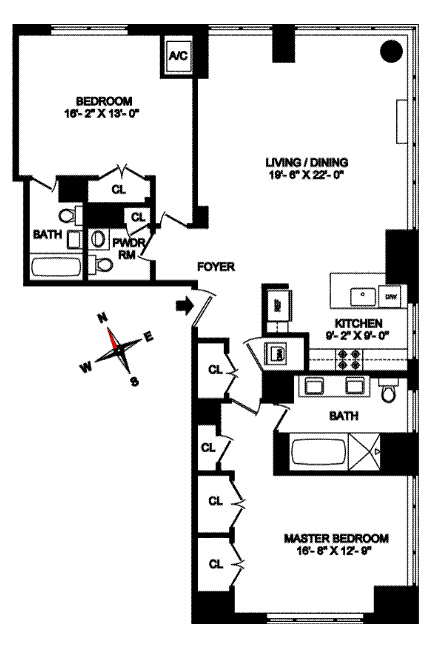
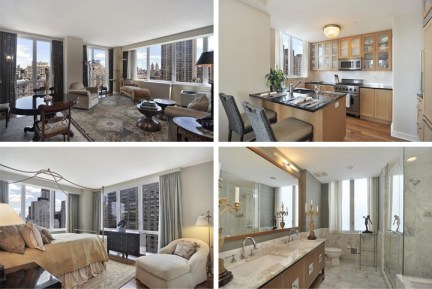
A recent post on one of my favourite blogs, The Real Estalker, featured a modest two bedroom apartment in NYC. I am no newbie to international real estate so know that prices tend to be, well, insane there, but this surprised me. The 1,486 square feet apartment is listed for $2,950.000….

Don’t get me wrong.. it’s a nice place, but $2.950.000? really??

Granted; the views are amazing, and having windows in both the bathroom and kitchen are rare in this city, but still…. $2,950.000???????

Let’s stop and have a closer look. First, let’s get this in metrics; $2,950.000 equals about €2.225.000 and 1486 square feet is about 138 square meters. I am actually wondering if, based on the floor plan, that figure is not a bit of a fib, but let’s say that square footage is a hard fact. Now come join me and find out what that price tag gets you in my home town Amsterdam, shall we?

Schermafbeelding 2013-09-11 om 11.40.38 AM

I give you, the floor plan of just one floor of our soon to be revealed mystery home

I wish I could get a sharper image, but I am confident that you can see that this home (yes home, not apartment) is a tad bit bigger than the NYC listing. It is situated on one of Amsterdam’s famous canals; Leliegracht. It’s listed for exactly €2.225.000 and for that you get 13 rooms spread over a total of 500 square meters (5382 square feet). But the real treat is the garden! The back of the house is double width so the garden is huge with a lot of privacy. It borders the neighbouring gardens so the city seems far, far away.

The House is situated on a lovely, treelined canal

The House is situated on a lovely, treelined canal

The home would not be fully available for use though. The second floor consists of two self-contained studio apartments that are rented out. But this, in turn, gives you a bit of cash each month, lowering the monthly payments. And the current tenant is willing t discuss a move. That’ll cost you a so called ‘oprotpremie’ (severance pay). Mind you, there is still more than enough private space, and the studio’s make use of their own separate entrance. The one downfall really is parking, or rather, the lack there-off. No private parking means you are subjected to the bureaucratic hell that is parking laws in Amsterdam. If you did not leave behind a house in the same area, you might be looking at a waiting list for one spot. But then again, the building fees of the apartment in NYC are a staggering $2668 a MONTH, which is more than enough to rent two parking spots somewhere nearby.

The main floor boasts a wonderful formal living room and eat-in kitchen with doors leading to the garden

The main floor boasts a wonderful formal living room and eat-in kitchen with doors leading to the garden

Lush gardens, with several spots to follow the course of the sun

Lush gardens, with several spots to follow the course of the sun

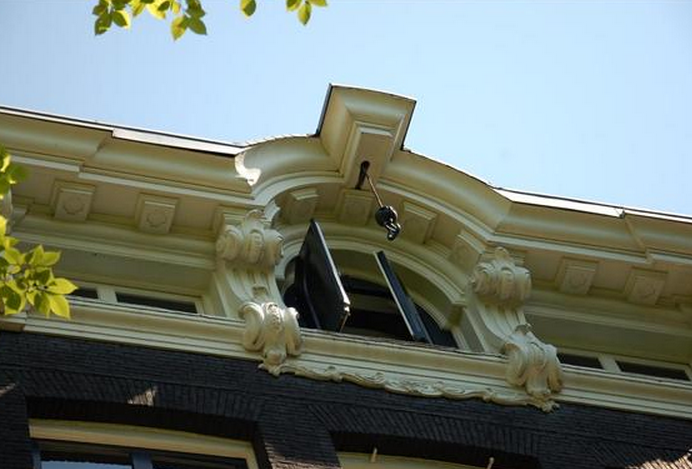
The house is old, built in 1900. Which is actually relatively young for its location as most homes on Amsterdam canals are from the 18th, sometimes even 17th Centuries. It’s a monument, which does mean that you are limited in what you can change or do with the home. But anything you do, you can do subsidised! Ahhh, the joy of living in a socialist state 😉

The house actually looks older than it's 114 years.

The house actually looks older than it’s 114 years.

So, I guess it’s safe to assume living in NYC comes with a price. A high price. And here we are, Dutch ‘disgruntleds’, complaining about the price of real estate in our capitol…… I dare not compare the other way around; checking to see what a private residence with garden on Manhattan would cost. I guess it’s more though.

Check out the website of Todd Selby… now!


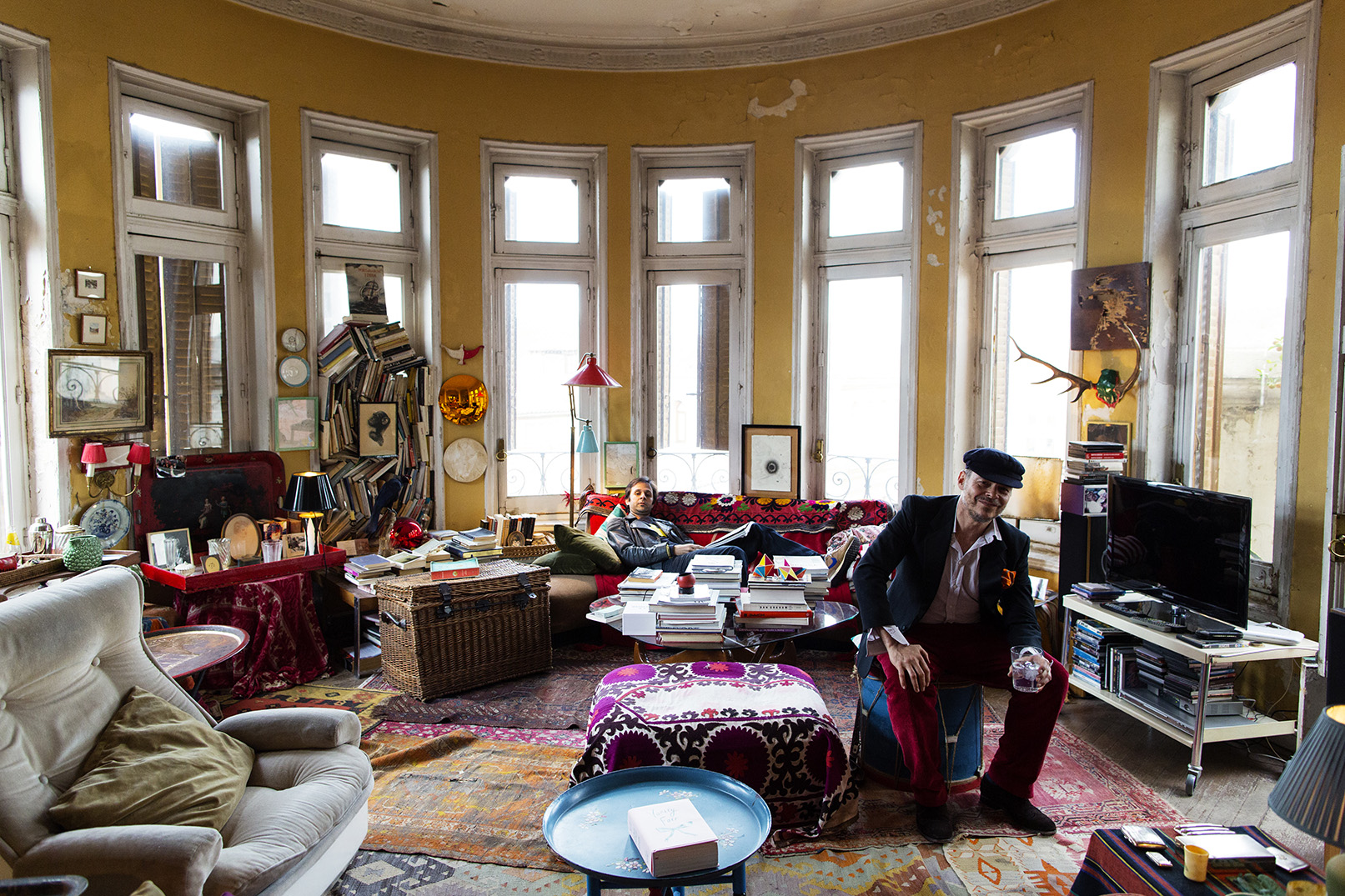
You are going to hate me for this because for the next couple of hours, you’ll be staring at your screen. Photographer, illustrator and journalist Todd Selby’s website The Selby is extremely addictive. His photographic portraits of homes and the people who live there are very inspiring.

PACO PINTÓN AND CHIQUINHO AT HOME IN MADRID. photo: The Selby

OTTO SANDER & MONIKA HANSEN photo: The Selby

ANDY SPADE AND KATE SPADE Photo: The Selby


HERVE PIERRE Photo: The Selby


If online is not enough for you, you might want to consider Todd Selby’s book, available here at Homevoyeurs. 

The Selby Is in Your Place was conceived when fashion and interiors photographer Todd Selby began taking portraits of dynamic and creative people—authors, musicians, artists, and designers—in their home environments and posting them on his web site. Nosy by nature, he wanted to see how personal style was reflected in private spaces. Lucky for us, he found his answer in the color-rich and eclectic quarters of a diverse group of subjects, including Simon Doonan and Jonathan Adler, Faris Rotter, Andre Walker, and Olivier Zahm, in New York, Los Angeles, Paris, Tokyo, Sydney, and London. Each profile is accompanied by Selby’s watercolor portraits of the subjects and objects from their homes, and illustrated questionnaires, which Selby asks each sitter to fill out. This book consists of over thirty profiles, many of which have never-before-seen, selected exclusively for the book. The result is a collection of unique spaces bursting with energy and personality that together create a colorful hodgepodge of inspirational interiors.

The Selby Is In Your Place by Todd Selby