Scandinavian Design


The easy and no-nonsense approach to furniture of Ikea stems from a long tradition of Scandinavian furniture design. A design movement aptly called just that; Scandinavian Design which became well known in the 30’s of the 20th Century. It has won the hearts of even the most critical design aficionados on the planet. It’s origins are to be found in modernism, but it has graduallydeveloped into a movement with its own distinct signature. And if you think it’s all wood and pre-fab; you are very wrong.

1x

Typical are the simplistic shapes and materials, often pale wood, used in the various designs. Function prevails over aesthetics which is often not the case when it comes to furniture design.

This typical feature was already noticeable in the 18th century in the Gustavian period. This furniture style originated in the Swedish court. Wood, pale coloured fabrics, functionality and subtle yet rich decorations marked this movement. In the early 19th century, General Karl Johan Bernadotte, later to become King of Sweden and Norway,  introduced the immensely popular Empire traditioto Sweden. He commissioned many carpenters to create Empire  furniture with a distinct Swedish style. This type of furniture was later named after him, Karl Johan. It succeeded the earlier Gustavian style which was lacking the richness and extravagance of what the king had witnessed in France. This little side step to rich and over the top patterns, decors and bolder coloured prints later turned out to be one of very few frivolities the Scandinavians allowed themselves. Since then, they have mostly gained recognition for their neatness, functionality and simplicity.

Gustavian Mirror

Gustavian Mirror

The Scandinavian countries were very successful in introducing a distinct and clever aesthetic ingredient to their traditional crafts. Obviously these countries had and still have many of the natural resources available for carpentry. Yet with the continuous development of industrial production, true craftsmanship was endangered. It was considered too costly. To make sure their particular craft industries survived the industrial revolution the Swedes established a number of associations to protect them from an overkill of inferior and mass-produced goods. The Svenska Slöjdföreningen (Swedish Society of Craft and Industrial Design), for example, was established in 1845 to promote Swedish craft production.


Up to 1900 the designs were mainly inspired on national folklore and, albeit cute and charming, got little attention from critics abroad. This changed when the countries joined forces at the Exposition Universelle (World Fair) in 1900 in Paris. Particularly the products of the Swedish Rörstrand porcelain factory proved to be a big hit with international design lovers.  Their simple porcelain series with large native flora dessins caught the attention of a large audience.

Alf Wallander for Rörstrand

Alf Wallander for Rörstrand

This was a time still largely dominated by Art Nouveau, a movement with a distinct love for floral patterns and shapes. Scandinavian design quickly found its way into architecture, furniture design and decorative elements. However, with the start of a new century, everybody meaning anything in the industry soon agreed that a new century needed a new approach on design and style. Figurative forms were more and more abstracted. This was to be seen in both product design and architecture. The simple style favoured by most Scandinavian designers and craftsmen meant that Scandinavian design was closely watched by trendsetters and spotters alike.


Of huge importance for the popularity of Scandinavian design was Finnish architect Eliel Saarinen (Father of Eero Saarinen). He was in his fifties and could look back on a successful career in his homeland, when, in 1929, he left Finland to settle in the United States. He soon became director of the Cranbrook Academy of Arts, which he designed himself. This was and still is an institute focusing on the education of designers, architects and artists. This was the breeding ground for big names such as Eero Saarinen, Carl Milles and Ray and Charles Eames.
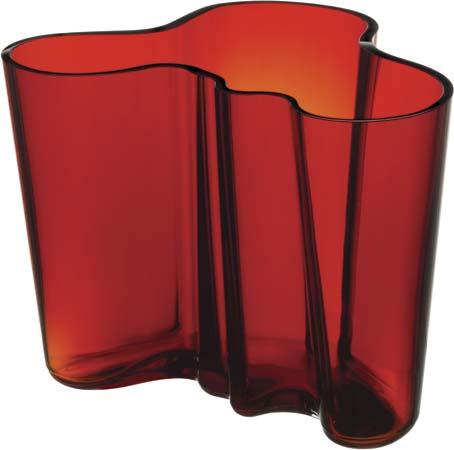
 

It was also in this interbellum period that Finish architect Alvar Aalto designed his well known Savoy Vase and chair 41 Paimio as well as many other pieces of furniture and buildings we all know so well.
Vase 'Savoy' Alvar Aalto

Vase 'Savoy' Alvar Aalto

The 1939 New York World Fair showcased a series of Swedish and Danish design. It was not until after the war, in the 1950’s that the style gained the commercial success and popularity to make its way into the homes of the everyday consumer. The Antchair, by Arne Jacobsen was one of the first Scandinavian designed chairs to be mass produced. This, as well as his Egg and Swan chairs were to be found in many interiors the world over.
The true recognition of Scandinavian architecture was confirmed in 1962 with the building of the TWA terminal designed by Eero Saarinen at New York’s primary airport.
TWA terminal JFK airport by Eero Saarinen

TWA terminal JFK airport by Eero Saarinen

Throughout the 60’s and 70’s Scandinavian design dominated the world of simplistic and efficient furniture design. The mass produced mostly wooden objects and items made their way into many homes and offices.  And off course, there was the rise of a chain of cheap yet stylish home products; Swedish furniture giant Ikea. This retail outlet started branching out across the Scandinavian borders in the early 70’s opening stores in Switzerland, Germany, Japan and Australia followed by Canada and Singapore. Today the chain is  one of the top known brands in the world with nearly 300 stores in 39 countries.
Many Ikea designs draw inspiration from classic Scandinavian designs. For instance the use of light bended wood as in Aalto’s 41 Paimio chair and 60 stool is found in many products of the retailer. The Ikea Frosta stool sharing a striking resemblance with Aalto’sstool, as seen below, which caused quite a stir with Aalto fans. Other critics call it clever borrowing.
Aalto left, Ikea right....

Aalto left, Ikea right....

Aalto '41' chair, Ikea's 'Benjamin' stool and Ikea's 'Poang' chair
Aalto '41' chair, Ikea's 'Benjamin' stool and Ikea's 'Poang' chair

This illustrates the easy and user friendly approach of mass produced Scandinavian design. Consumers can pick and mix cheaper furniture with a few classic design greats and create their own style and flair. A concept much used by fashion overs around the globe. It is no coincidence that Hennes and Mauritz is also Swedish. 
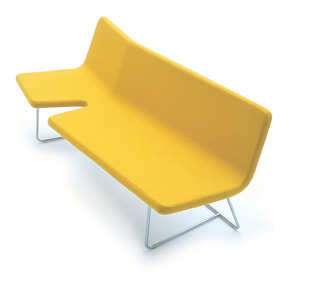
But leaving it with that would be too easy. Scandinavia still is top of the bill when it comes to design with big names like Iittala, Norway Says, Georg Jensen and Arabia.  Remarkably, the Scandinavian countries today continue to produce many vintage designs and classics. This is yet another testimony to their style, timelessness, practicality and talent to understand or maybe even transcend trends.
sofa 'Break', 2004, by Norway Says
sofa 'Break', 2004, by Norway Says

Shop on TV and movie sets


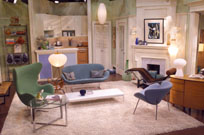
Say you’re watching Will & Grace and the shirt Will is wearing strikes your fancy, you just have to have Grace’s shoes, or you cannot get your eyes off Jack’s blue vintage sofa. Where to start?

There are a few shops in the greater Los Angeles area and cities like London that sell items worn by characters in famous TV shows. But obviously, online is your best bet. For instance, every now and then e-Bay auctions props or clothes used in TV series or movies. But chances are very very slim that they happen to sell Grace’s shoes or Jack’s sofa.

A few online outlets and initiatives claim they can help you find pretty much any item seen on TV. They must be in frequent touch with set designers, stylists and prop masters in Hollywood to live up to this, or they might just be promising more than they can live up to. Let’s put a few of them to the test.

First of is seenon.com. If you’ve seen it on TV, in a movie, or on a movie star; there’s a chance they know where to find it.  A true pity is that they focus mainly on clothes and accessories and less on decorative items and furniture. However, if you are into fashion,  this site is a true treasure chest. You can look up pretty much any show and then browse articles per character. Grace Adler has over 50 pairs of shoes on here.

They do have information  on Jack’s blue sofa though.

Jack's apartment in Will & Grace

Jack's apartment in Will & Grace

The sofa is Arne Jacobsen’s Swan Sofa, actually designed in 1958. The entire set, including the two chairs, are part of that line. Numerous shops sell this design classic, yet the shop seenon.com links to seems to be sold out. But have a look in Google and you should be able to score one near your home. Further to this sofa, they only offer furniture for three movies. Sex and the City, The Princess Diaries and License to Wed. 


Another website is Famous Fashions, again focusing mainly, if not solely, on clothing and accessories.  And the Club World, the US TV network and home to shows like 90210, Gossip Girl and Supernatural will soon launch a feature, Style, where viewers can find shopping information on items worn in the show.

 To find fashion donned by the stars proves to be not too hard. To find out where to buy their character’s sofa or vase seems to be a lot harder.

Backlot props, a website auctioning off and listing props used in movies and TV shows offers hope. The orange chairs used in the movie Dukes of Hazard as seen in the below frame can be found through here for example.  

Orange brawl bar chairs

Orange brawl bar chairs

Backlotprops.com

Backlotprops.com

Yet a search for other furniture brings back very little result. Yet again it’s mainly clothes that are listed here. Also, the list of movies of which one can browse props is limited.


Star Wars fans can get their kicks on this site.  The aptly called Movieprop.com features many links to certified replica dealers of masks and swords used in this epic science fiction flick and all the episodes and sequels to follow.

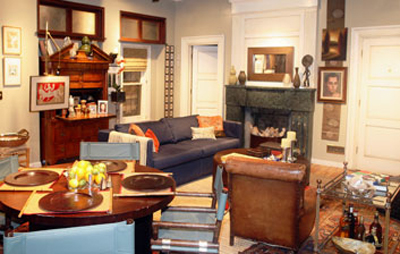
Yet for a simple old fashioned guy like myself who likes to know where to buy Will’s stunning faux-antique secretary desk as pictured in the image below, it is a grim grim world.

Will's living room

Will's living room on display in the library of Emerson college where W&G creator Max Mutchnick was a student

It’s pretty isn’t it? Maybe I should send an email to the set decorator Melinda Ritz herself?

H&M Home collection!


Yesterday the postman made me cry a little bit. With joy that is. I received a lovely catalogue of the Hennes & Mauritz home collection!, available online NOW!


Natural Collection

Natural Collection

In line with great H&M tradition the collection is hip, colourful, stylish and DIRT CHEAP!
Tea towels and dish cloths for a mere €3 or less, pillow sheets for as little as €3,99, duvet covers for €29,99! To be fair, they only measure 1.40 x 2.20 which is too small for most double beds, but still.
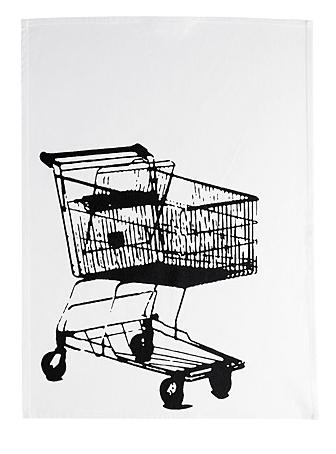
Tea cloth with shopping cart

Tea cloth with shopping cart

Cushions, throws, plaids, table linen bags, baskets, towels and bath mats; they have it all!
The collection consists of four different lines; Graphic, Colourful, Natural and Classic.
Check the online shop on their website.
Natural Collection

Natural Collection

 They launched the online shop this week in Sweden, Germany, The Netherlands and Austria. It is not known yet if the collection will launch in other countries too.


Poll result; favourite room


The last poll result shows that 48% of you favour their living room over other rooms in their house.

The kitchen (20%) and bathroom (18%) are the runners up before the bedroom (15%).

Next poll coming up soon.